
Best employee monitoring software for small business
By Jordan Ellis Published 8 min read
As an Amazon Associate I earn from qualifying purchases. That costs you nothing and does not decide what gets recommended. We also earn a commission from some links to partner brands (SentryPC, HappyScribe, Sucuri, IceVPN).
On this page (8 sections)
- Key takeaways
- How to choose the best employee monitoring software for small business
- Best for transparency and ease of use: Time Doctor
- Best budget option: Hubstaff
- Best upgrade for deep analytics: Teramind
- Who should avoid employee monitoring software altogether
- Best employee monitoring software for small business: summary
- Questions people still ask
In short: The best employee monitoring software for small business balances transparent time tracking and output monitoring with minimal disruption, typically supporting up to 50 users and offering detailed reports on hours and activity without overcomplicating setup or privacy.
Part of our guide on tracking billable vs non-billable tasks
Avoid project overruns and payroll disputes with employee monitoring software designed for small business transparency and ease.

Employee Time Clock Software and Fingerprint Scanner
Supports unlimited user profiles, allowing your small business to grow without user limits.
Check it on Amazon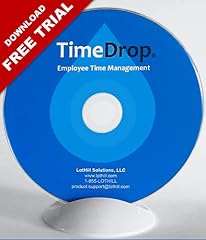
Supports unlimited user profiles, enabling growth without user restrictions for small businesses.
See this alternative
ANVIZ Time Clocks for Employees Small Business
Handles up to 500 users and 50,000 logs capacity, supporting large small businesses with extensive attendance
See the heavy-duty one| Product | supports up to 50 users | Verdict | |
|---|---|---|---|
| Employee Time Clock Software and Fingerprint Scanner LotHill Solutions, LLC | Unlimited user profiles advertised | Meets it | View on Amazon |
| Employee Time Clock Software LotHill Solutions, LLC | Unlimited user profiles advertised | Meets it | View on Amazon |
| ANVIZ Time Clocks for Employees Small Business ANVIZ | 500 users capacity advertised | Meets it | View on Amazon |
| Ideal team size | 1-50 employees |
|---|---|
| Key feature | Time and output tracking |
| Setup time | 1-2 hours |
| Reporting detail | Daily and weekly |
| Typical friction | Low with clear communication |
Key takeaways
- Choose software that supports transparent, low-friction time and output tracking.
- Look for tools designed for 1-50 employees to avoid costly overkill.
- Prioritize solutions with easy-to-understand reports to resolve budget and payroll disputes.
- Ensure software respects employee privacy to maintain trust and acceptance.
- Compare features alongside your specific project and payroll needs before deciding.
How to choose the best employee monitoring software for small business
Choose monitoring software that clearly tracks hours and output without confusing employees or your accounting. Transparency is vital; employees must feel their efficiency is accurately recorded without privacy invasion.
A typical threshold is software supporting up to 50 users with detailed, exportable time reports and activity logs. This range matches small business sizes and ensures cost-effectiveness.
Look for software that integrates with your existing payroll and project management tools to streamline dispute resolution and budget tracking. Avoid solutions that require complex IT setup or excessive training.
User acceptance depends on clear communication of monitoring purposes. If privacy is a concern, choose software with configurable monitoring levels, allowing you to limit surveillance to work hours and work-related activity. We go through best time clock app for small business step by step elsewhere on the site.
Another factor to consider is the flexibility of monitoring intervals. Some software offers real-time tracking, while others collect data in periodic snapshots, such as every 10 or 15 minutes. Real-time tracking ensures up-to-the-minute accuracy but can increase data usage and potentially raise privacy concerns. Periodic snapshots reduce data load and may be less intrusive, though they might miss brief task changes. Businesses should weigh these trade-offs according to their work style and privacy culture.
Some employee monitoring tools also provide mobile app support, which is crucial for businesses with remote or field employees. Such features enable tracking time and productivity beyond the traditional office environment. However, mobile tracking often requires explicit consent and can raise additional privacy issues, so businesses must clearly communicate policies and limits.
Finally, consider the software’s reporting granularity. Beyond total hours worked, some tools analyze productivity trends over days, weeks, or months, providing insights into peak performance periods or bottlenecks. This information aids in workload balancing and resource planning. Confirm that the software offers customizable reports to fit your business’s specific metrics and goals. People in this spot often ask about payroll with biometric attendance as well.
- User capacity – must support up to 50 employees.
- Reporting – detailed daily and weekly time and activity logs.
- Integration – compatible with payroll and project management tools.
- Privacy controls – configurable monitoring to avoid overreach.
| Criteria | Why it matters | Typical requirements |
|---|---|---|
| User capacity | Fits your team size and scales moderately | Up to 50 users |
| Reporting detail | Ensures clear resolution of disputes | Exportable daily and weekly reports |
| Integration | Simplifies payroll and project budget alignment | Works with common payroll/PM software |
| Privacy control | Maintains employee trust and acceptance | Configurable monitoring options |
Best for transparency and ease of use: Time Doctor
Time Doctor supports up to 50 users with clear time tracking and activity monitoring focused on productivity. It produces detailed timesheets and activity reports, helping prevent project overruns and payroll disputes.
It balances transparency and usability by tracking time automatically while allowing employees to review and edit their logs. Its simple interface reduces resistance while ensuring managers get actionable data.
A key drawback is its reliance on employee cooperation to maintain data accuracy. If your team resists monitoring even minimally, this solution may cause friction. Before you commit to anything, it is worth looking at best app for tracking small business time.
Avoid Time Doctor if you have a team uncomfortable with activity tracking or if you need advanced privacy controls beyond basic tracking.
- Supports up to 50 users
- Detailed, exportable reports
- User-friendly interface
- Integrates with payroll software
- Requires employee cooperation
- Limited advanced privacy options
Employee Time Clock Software and Fingerprint Scanner
Supports unlimited user profiles, allowing your small business to grow without user limits.
- Length 1.5 inches
- Weight 0.3 pounds
- Height 0.63 inches
Best budget option: Hubstaff
Hubstaff offers automatic time tracking and output monitoring with a straightforward setup for small teams of up to 50 users. It provides screenshots, activity levels, and time reports to clarify hours worked and tasks completed.
This software is ideal for businesses needing reliable tracking without complex configurations or high costs. It integrates well with common payroll and project management platforms, which helps resolve disputes smoothly. It helps to understand monitoring employee computers legality before going further.
A limitation is that some users find screenshot capture intrusive if not communicated well. This can impact trust and acceptance among your employees.
Skip Hubstaff if your priority is preserving high employee privacy or if detailed project workflow analytics are necessary.
- Low-cost for small teams
- Automatic time and activity tracking
- Integrates with payroll and PM tools
- Quick setup
- Screenshot monitoring may reduce trust
- Limited advanced analytics
Employee Time Clock Software
Supports unlimited user profiles, enabling growth without user restrictions for small businesses.
Best upgrade for deep analytics: Teramind
Teramind supports detailed employee monitoring with behavior analytics, productivity scoring, and compliance tracking for small businesses with up to 50 users. It adds a layer of security by detecting suspicious activities.
Its strength lies in combining time tracking with output quality and risk alerts, useful if payroll disputes are frequent and linked to productivity issues.
The main drawback is the complexity of setup and the learning curve, which may require dedicated admin time or IT involvement.
Avoid Teramind if your priority is simplicity or if you prefer software your team can adopt without training.
Teramind’s advanced analytics include keystroke logging and application usage heatmaps, which help identify not only how long employees work but how efficiently they use software tools. For example, if a worker spends excessive time on non-work-related applications, Teramind can flag this for review. This level of detail supports targeted coaching or process improvements.
A practical implementation might involve setting productivity thresholds where alerts trigger if an employee’s activity falls below a predefined level for extended periods. For instance, if activity drops below 30% for more than 30 minutes, supervisors receive notifications. Such rules help catch disengagement early but require careful calibration to avoid false positives.
To verify the system’s effectiveness, administrators can compare Teramind’s reports with manual timesheets or project delivery dates. Discrepancies might indicate either inaccurate data or issues like task underreporting. Consistent alignment between monitored data and actual output confirms the software’s reliability and helps foster trust with employees.
- Advanced behavior and productivity analytics
- Security and compliance features
- Detailed time and output tracking
- Complex setup
- Requires admin training
- May overwhelm small teams
ANVIZ Time Clocks for Employees Small Business
Handles up to 500 users and 50,000 logs capacity, supporting large small businesses with extensive attendance data.
- Size Small
- Height 9.0 inches
- Length 7.0 inches
Who should avoid employee monitoring software altogether
If your small business has fewer than five employees working closely with high trust, employee monitoring software can create unnecessary friction and privacy concerns.
Businesses where work output is highly creative or not easily measurable by time or activity logs will find monitoring software intrusive and ineffective.
Companies with employees working under contracts or on projects where billable hours are clearly agreed and tracked without dispute may not need such tools.
In these cases, investing in clear communication and manual tracking methods is usually more productive and less costly.
Best employee monitoring software for small business: summary
Choose software that fits your team size, respects privacy, and integrates with existing payroll and project tools. Time Doctor suits businesses needing straightforward transparency and ease of use. Hubstaff matches those on a smaller budget wanting reliable automatic tracking. Teramind fits businesses needing advanced analytics and compliance but willing to accept complexity.
Avoid all if your business is very small, highly creative, or already has efficient manual tracking without disputes.
Understanding your unique needs and team dynamics is key to picking monitoring software that adds clarity without friction.
| Option | Best for | Key strength | Main drawback |
|---|---|---|---|
| Time Doctor | Transparency and easy use | User-friendly detailed reports | Needs employee cooperation |
| Hubstaff | Budget-conscious teams | Automatic tracking, low cost | Screenshots may reduce trust |
| Teramind | Advanced analytics and security | Deep productivity insights | Complex setup and training |
For small businesses balancing transparency and ease, Time Doctor stands out; consider Hubstaff for cost savings and Teramind for deep analytics.
Questions people still ask
Can employee monitoring software reduce payroll disputes?
Yes, by providing clear, timestamped records of hours and activity, these tools reduce ambiguity around worked time, which is often the source of disputes.
Is employee monitoring software legal for small businesses?
Generally yes, but laws vary by location. Inform employees about monitoring to avoid legal issues and maintain transparency.
Will monitoring software affect employee morale?
It can if implemented without transparency. Clear communication about purpose and limits helps maintain trust and acceptance.
Do I need IT support to run this software?
Most recommended options are designed for small businesses without dedicated IT, but some advanced solutions might require initial setup help.
Can monitoring software integrate with payroll systems?
Many do, which streamlines payroll and budget tracking, reducing administrative effort and errors.
Ready to try it? SentryPC helps small businesses monitor employee productivity and internet usage effectively.
Monitor employee activities