
QuickBooks vs FreshBooks: accounting or invoicing first?
By Jordan Ellis Published 9 min read
As an Amazon Associate I earn from qualifying purchases. That costs you nothing and does not decide what gets recommended. We also earn a commission from some links to partner brands (SentryPC, HappyScribe, Sucuri, IceVPN).
On this page (7 sections)
In short: QuickBooks suits businesses needing full accounting paired with invoicing, handling complex workflows and larger volumes. FreshBooks focuses on simple, fast invoicing for smaller clients or freelancers. The deciding factor is your average monthly invoice count and need for accounting depth.
Part of our guide on quickbooks vs xero
Avoid surprise fees and payment delays by choosing the right invoicing and accounting software for your business scale and workflow needs.
![Express Invoice Billing and Invoicing Software Free [PC Download]](https://m.media-amazon.com/images/I/41PYp1-Qu7L._SL240_.jpg)
Express Invoice Billing and Invoicing Software Free [PC
Supports at least 50 invoices per month suitable for freelancers or small teams
Check it on Amazon
Express Invoice Software for Managing and Tracking Quotes
Subscription plan supports up to 50 invoices per month
See this alternative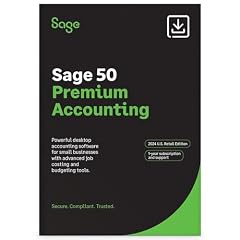
| Product | subscription plan invoice limit | Verdict | |
|---|---|---|---|
| Express Invoice Billing and Invoicing Software Free [PC Download] NCH Software | Subscription plan supports up to 50 invoices per month | Meets it | View on Amazon |
| Express Invoice Software for Managing and Tracking Quotes NCH Software | Subscription plan supports up to 50 invoices per month | Meets it | View on Amazon |
| SAGE 50 Premium Accounting 2024 U.S. Retail Edition 3-User Sage Software | No invoice limit or monthly invoice count published | Not published | View on Amazon |
| SAGE 50 Premium Accounting 2024 U.S. Retail Edition 1-User Sage Software | No invoice limit or monthly invoice count published | Not published | View on Amazon |
| Invoice volume limit | Usually unlimited in QuickBooks |
|---|---|
| Dispute management | More comprehensive in QuickBooks |
| Ease of use | Higher for FreshBooks |
| Accounting features | Robust in QuickBooks |
| Best for freelancers | FreshBooks |
Key takeaways
- QuickBooks excels with integrated accounting and large invoice volumes.
- FreshBooks is simpler, ideal for smaller, less complex invoicing needs.
- Invoice size and dispute risk influence which platform suits you better.
- Consider your accounting workflows before choosing invoicing-first software.
- Budget and tech comfort also shape your best option.
The differences at a glance
QuickBooks and FreshBooks differ mainly in their core focus: QuickBooks centers on comprehensive accounting with invoicing as a component, while FreshBooks prioritizes invoicing with lightweight accounting features. This distinction shapes how each handles payments, disputes, and workflows.
Businesses with complex accounting needs or higher invoice volumes usually find QuickBooks more fitting. Meanwhile, FreshBooks suits those valuing simplicity and speed, often freelancers or small teams with straightforward billing.
Another point of comparison is the interface design and onboarding process. QuickBooks, built with accounting professionals in mind, presents a more detailed dashboard and multiple setup options, which can initially overwhelm new users. FreshBooks offers a cleaner, more intuitive interface that lets users start invoicing within minutes, making it ideal for freelancers who want to minimize administrative time. This aspect impacts learning curves significantly: QuickBooks users often spend several hours or days training or consulting guides, while FreshBooks users can be productive almost immediately.
The companies behind these products also influence their feature evolution. QuickBooks, developed by Intuit, benefits from decades of accounting software development and a vast ecosystem of third-party applications and integrations, including payroll, payment gateways, and tax solutions. FreshBooks, although newer and smaller, focuses on customer support and continuous improvements in invoicing and time tracking, often releasing updates based on user feedback. This means QuickBooks tends to add complex features, while FreshBooks refines simplicity and usability. People in this spot often ask about invoicing software for small business as well.
| Feature | QuickBooks | FreshBooks |
|---|---|---|
| Core focus | Full accounting + invoicing | Invoicing + simple accounting |
| Invoice volume | Often unlimited | Limited tiers depending on plan |
| Dispute handling | Integrated, detailed | Minimal, manual |
| User complexity | Moderate to high | Low |
| Ideal user | Small to mid businesses | Freelancers, small teams |
- Handles large invoice volumes
- Deep accounting integration
- Steeper learning curve
- More features than freelancers need
Invoice volume and cadence impact
A business issuing more than 50 invoices monthly usually needs QuickBooks to keep pace without manual workarounds. FreshBooks plans often cap invoice volumes or grow costly beyond lower tiers. Invoice cadence—how often invoices go out—also favors QuickBooks for regular billing cycles.
If your invoicing frequency is low or erratic, FreshBooks’ streamlined interface speeds up getting bills to clients. Its automation shines when disputes and corrections rarely occur, and the typical invoice amount is under $5,000.
Choosing based on invoice volume avoids surprise fees and delays tied to exceeding FreshBooks’ tier limits or QuickBooks accounting complexity. Volume also predicts how much workflow automation is necessary.
Invoice volume is not the only metric affecting software choice; invoice complexity matters too. Businesses issuing invoices with multiple line items, taxes, discounts, or requiring customization find QuickBooks better equipped. For example, a QuickBooks user can create invoices with detailed tax codes and apply different rates for products or services, which FreshBooks only supports in a limited fashion. Such detail matters in industries like construction or retail where billing accuracy impacts compliance.
Invoice cadence can also vary within a business depending on customer types. Companies issuing monthly recurring invoices alongside occasional one-off bills benefit from QuickBooks’ automated workflows, which handle recurring billing and reminders seamlessly. FreshBooks supports recurring invoices but may require manual intervention for exceptions or changes, increasing administrative time. For example, a company billing 60 invoices monthly with 40 recurring and 20 customized benefits from QuickBooks’ automation to reduce errors and save hours each month.
A practical check is to review your recent invoices: if more than 20% require manual adjustments post-issuance, QuickBooks’ features to streamline corrections and updates become more valuable. Ignoring this can lead to bottlenecks and delayed payments.
- QuickBooks scales with volume
- FreshBooks simplifies low volume invoicing
- FreshBooks charges rise with volume
- QuickBooks requires accounting setup
Express Invoice Billing and Invoicing Software Free [PC Download]
Supports at least 50 invoices per month suitable for freelancers or small teams
Dispute risk and payment workflows
QuickBooks includes features for tracking payment disputes and credits, with automated workflows to resolve them while keeping accounting records intact. This reduces surprise fees or uncollected amounts over time.
FreshBooks offers basic payment reminders but handles disputes manually outside the system, risking delays or errors unless your team is proactive.
For businesses in industries prone to payment delays or errors, QuickBooks’ integrated dispute management keeps cash flow predictable. If your invoice disputes rarely exceed 5%, FreshBooks may suffice.
Dispute risk varies widely by industry and client size. For instance, businesses in legal services or consulting report dispute rates around 10-15%, often due to billing disagreements or change orders. QuickBooks’ dispute tracking not only logs these events but integrates them into accounts receivable reporting, helping managers forecast cash flow and identify repeat issues. FreshBooks lacks this integration, so disputes may be handled via email or phone, increasing risk of lost information.
Payment workflows in QuickBooks extend beyond dispute tracking to include applying partial payments, issuing credits, and tracking write-offs. These features ensure that the accounting records remain accurate, reducing reconciliation errors during audits. Without such tools, users may struggle to keep the books clean, especially if payment plans or write-offs are common. For example, a construction firm managing 10 partial payments monthly benefits by automatically reflecting those in their financial statements using QuickBooks.
A simple way to verify your needs is to analyze your last quarter’s payments: if you had more than 5% of invoices with disputes or partial payments, QuickBooks' advanced workflow can prevent revenue leakage and improve client satisfaction through transparent communication.
- QuickBooks automates dispute workflows
- Keeps complete accounting records
- FreshBooks requires manual follow-up
- Less suited for complex disputes
Express Invoice Software for Managing and Tracking Quotes
Subscription plan supports up to 50 invoices per month
Accounting features and team collaboration
QuickBooks provides full bookkeeping features including expenses, payroll, tax estimation, and multi-user access with role controls. It suits businesses with an accountant or a team managing complex financial workflows.
FreshBooks offers limited accounting, focused on income tracking and expense logging, best for solo entrepreneurs or very small teams without dedicated finance staff.
Your team's accounting expertise guides the choice. If you need audit-ready books or multiple users with permissions, QuickBooks is the better fit. Otherwise, FreshBooks offers a gentler introduction to financial tracking.
Team collaboration involves not only user access but workflow integration. QuickBooks supports multiple user roles, such as accountant, sales, or admin, each with customizable permissions, enabling secure data sharing without risking sensitive information exposure. This is crucial for companies with distributed teams handling invoicing, payroll, and bookkeeping simultaneously.
FreshBooks, while allowing limited multi-user access, lacks granular role management, so all users generally have the same permissions. This can be a risk in organizations needing separation of duties to prevent errors or fraud. Small teams may not feel this impact immediately, but growing companies typically outgrow FreshBooks in this respect.
Another accounting feature to consider is tax filing support. QuickBooks automates tax calculations, generates reports, and integrates with tax filing services, reducing manual work during tax season. FreshBooks provides basic tax tracking but requires exporting data for external filing, adding time and potential for errors. For example, businesses in states with complex sales taxes find QuickBooks’ automation saves dozens of hours annually.
- QuickBooks supports full accounting
- Multi-user access with controls
- FreshBooks limited accounting features
- No advanced payroll or tax tools
Which should you buy?
If your business issues frequent invoices, manages payment disputes, and requires robust accounting workflows, QuickBooks is the smart choice despite its steeper learning curve. It supports growth without surprise fees.
Choose FreshBooks if you prioritize quick, simple invoicing with fewer invoices, minimal disputes, and straightforward bookkeeping. Ideal for freelancers or very small teams with uncomplicated finances.
Budget-conscious startups might prefer FreshBooks to keep costs low until complexity grows. Larger or scaling teams should invest in QuickBooks early to avoid costly migrations.
- QuickBooks: Best for businesses with over 50 invoices/month and complex accounting needs.
- FreshBooks: Best for freelancers, consultants, and teams with simple billing and low dispute risk.
- Avoid FreshBooks if you handle many disputes or require multi-user accounting.
- Consider QuickBooks if tax handling, payroll, or audit requirements matter.
- Evaluate your current invoice volume and dispute frequency before selecting.
QuickBooks is best for businesses needing accounting depth and scalability; FreshBooks wins for simple invoicing.
Questions people still ask
Can FreshBooks handle payroll and taxes as QuickBooks does?
No, FreshBooks offers basic bookkeeping but lacks integrated payroll or automated tax calculations, which QuickBooks provides. If payroll or tax automation is essential, QuickBooks is necessary.
What invoice volume justifies moving from FreshBooks to QuickBooks?
Monthly invoicing over 50 per month typically warrants QuickBooks for cost efficiency and automation. Below that, FreshBooks is often simpler and adequate.
Does QuickBooks require an accountant to set up?
No, but QuickBooks’ complexity means some users benefit from accountant setup. Small businesses with no financial expertise may find FreshBooks easier initially.
How do the platforms differ in handling late payments?
QuickBooks automates reminders and dispute workflows. FreshBooks automates reminders but requires manual dispute handling, increasing admin work if late payments are frequent.
Is one platform better integrated with payment processors?
QuickBooks generally supports more payment gateways and integrates deeply with banking data, aiding reconciliation. FreshBooks supports common processors but fewer integrations.
Ready to try it? Invoiless simplifies the invoicing process, making it easier to manage multiple invoices and track payments effectively.
Manage your invoices easily