Toggl vs Clockify: which time tracker suits a small team?
By Jordan Ellis Published 8 min read
As an Amazon Associate I earn from qualifying purchases. That costs you nothing and does not decide what gets recommended. We also earn a commission from some links to partner brands (SentryPC, HappyScribe, Sucuri, IceVPN).
On this page (8 sections)
In short: For small teams needing transparent, low-friction time tracking that employees accept, Clockify wins for free tier inclusivity and unlimited users, while Toggl offers a more polished UI and advanced reporting for teams willing to pay. Clockify suits tighter budgets, Toggl suits teams valuing simplicity and insights.
Part of our guide on integrating asana and slack time
This guide compares Toggl and Clockify to help small teams pick the time tracker that cuts budget overruns and payroll disputes.
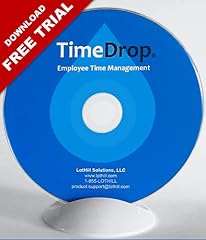
Supports unlimited user profiles allowing your team to grow without user limits
Check it on Amazon
Employee Time Clock Software & Contactless RFID Badge Reader
Unlimited user profiles stated in bullets
See this alternative| Product | max free users number | Verdict | |
|---|---|---|---|
| Employee Time Clock Software LotHill Solutions, LLC | Unlimited user profiles stated in bullets | Meets it | View on Amazon |
| Employee Time Clock Software & Contactless RFID Badge Reader LotHill Solutions, LLC | Unlimited user profiles stated in bullets | Meets it | View on Amazon |
| Free plan users | Clockify unlimited, Toggl 5 |
|---|---|
| Reporting depth | Toggl richer |
| Integrations count | Toggl more |
| Mobile app quality | Both solid |
| Ease of employee adoption | Toggl easier |
Key takeaways
- Clockify offers unlimited users and projects on its free plan, ideal for small teams on tight budgets.
- Toggl has a more intuitive interface and stronger reporting tools, but limits free plan users to 5.
- Both integrate with popular tools, but Toggl supports more advanced automation features.
- Choose Clockify if you want broad free usage; choose Toggl if you prioritize ease of use and deeper analytics.
- Both reduce payroll disputes with transparent time logs that employees can easily manage.
The differences at a glance
Clockify and Toggl are popular time trackers for small teams but differ in user limits, reporting, and integrations. Clockify’s free plan supports unlimited users and projects, while Toggl caps free users at five.
Toggl offers more advanced reporting features and better automation integrations, but at a cost. Clockify prioritizes broad access and simplicity, especially on the free tier.
The choice hinges mainly on your team size, budget, and reporting needs.
Another key difference lies in the way each platform handles offline time tracking. Clockify enables users to record time without an internet connection and syncs data once reconnected, preserving accuracy for teams working in fluctuating connectivity environments. Toggl also supports offline tracking but with occasional sync delays that may cause minor discrepancies if time entries overlap or are edited before syncing. We go through handling offline time entries step by step elsewhere on the site.
Customization options for time entry fields differ notably. Toggl allows adding tags, billable status, and client details with each entry, enhancing sorting and billing. Clockify’s free tier keeps time entry simple with limited custom fields, which might suffice for teams focused more on total hours than granular project costing.
| Feature | Clockify | Toggl |
|---|---|---|
| Free plan users | Unlimited | 5 users |
| Projects on free plan | Unlimited | Limited |
| Reporting depth | Basic to moderate | Advanced |
| Integrations | 40+ popular apps | 90+ including automation |
| Mobile apps | Available, functional | Available, polished |
| Offline mode | Yes | Yes |
| Automation features | Limited | Advanced |
User limits and pricing impact small teams
Clockify’s free plan supports unlimited users and projects, which means a 20-person team can track time without paying. Toggl’s free plan limits you to 5 users, forcing larger teams to upgrade immediately.
For teams managing payroll disputes transparently, having all employees on the same platform without hidden costs matters. Clockify’s model reduces friction by not penalizing scale in the free tier. The other half of this decision is 12 user time tracking comparison.
If your team is under 5 users and you want a cleaner UI and better reporting, Toggl’s free plan might suffice.
Pricing plans beyond the free tiers also impact small teams as they grow. Clockify’s paid plans start at $4.99 per user per month, adding features like time audits and approvals. Toggl’s paid plans, beginning at $10 per user per month, unlock advanced analytics and priority support. Small teams should anticipate future needs when choosing, as upgrading can increase costs substantially.
Discounts for annual subscriptions vary. Toggl offers about 20% off for yearly billing, which can make a difference for budget-conscious teams planning long-term. Clockify’s annual payment option similarly reduces monthly costs, making the paid tiers more affordable when committed upfront. For the detail, see our notes on tracking employee hours easily.
Employee Time Clock Software
Supports unlimited user profiles allowing your team to grow without user limits
Reporting and analytics for budget control
Toggl offers deeper, more customizable reports that help managers spot budget overruns. You can filter by projects, clients, and billable hours with visual charts included.
Clockify covers the basics but lacks the nuanced analytics Toggl provides without upgrading. This can impact how clearly you identify payroll overages or project drift.
If precise budget control is your priority and you accept paying for it, Toggl’s reporting tools justify the cost. For simple tracking and transparency, Clockify is enough. The other half of this decision is how to track work hours effectively.
Toggl’s reporting interface includes pre-built templates for common use cases, such as tracking billable hours by client or comparing team productivity week over week. These templates save time and provide immediate insights without manual setup.
Clockify reports can be exported to CSV or PDF but require more manual effort to create detailed views. This means managers might spend extra time assembling data outside the app if advanced analytics are needed.
An example: a project manager wanting to catch scope creep can use Toggl’s visual burn-down charts to see if logged hours exceed estimates. Clockify would require exporting data and plotting charts externally, delaying response time. This difference can affect how quickly teams react to cost overruns. We go through sentrypc monitoring features step by step elsewhere on the site.
Employee Time Clock Software & Contactless RFID Badge Reader
Unlimited user profiles stated in bullets
- Size Small
Integration and automation to reduce manual tasks
Toggl supports more integrations including Slack, Asana, and Zapier workflows, enabling automation of reminders and time entries.
Clockify integrates with common tools but has fewer automation options. This might increase manual tracking effort in busy offices.
Teams that value workflow automation to reduce errors and save time will find Toggl’s ecosystem better. Smaller teams or those with simpler setups will find Clockify adequate.
Clockify offers browser extensions that allow quick time tracking directly from web apps like Trello and Jira, but these extensions generally provide fewer automation capabilities than Toggl’s Zapier integrations.
For instance, Toggl can automatically start a timer when a task moves to ‘In Progress’ in Asana, eliminating the need for manual starts. Clockify requires manual input or simpler triggers, which can increase the likelihood of missed time entries.
Teams with complex workflows involving multiple cloud apps may find Toggl’s broader automation ecosystem reduces administrative overhead significantly, justifying the higher price point for some.
Employee adoption and ease of use
Toggl’s interface is praised for simplicity and employee acceptance, reducing friction in daily use. It offers one-click tracking and quick reminders.
Clockify’s interface is functional but slightly less refined, which can affect how quickly employees adopt it and log hours consistently.
If payroll disputes arise from employee resistance to tracking, Toggl may reduce conflict by being easier to use and less intrusive.
Employee adoption can also depend on mobile app usability. Toggl’s mobile app includes features like widget timers and Siri shortcuts, allowing users to start tracking with minimal taps, which boosts spontaneous usage.
Clockify’s mobile app covers core functions but lacks some shortcuts and reminders, which can reduce its appeal for employees frequently on the move.
An onboarding example: teams using Toggl reported faster initial adoption rates, as employees found the intuitive interface less disruptive to their workflow. Clockify’s slightly clunkier interface sometimes necessitated additional training or reminders to maintain consistent use.
Toggl vs Clockify: which time tracker suits a small team?
If your small team (up to 5 users) prioritizes clear, advanced reporting and automation, Toggl is the better fit despite its user limits. It balances ease of use with deeper insights that help track budgets closely.
For teams larger than 5 or very tight budgets, Clockify’s unlimited free plan is unbeatable. It provides transparency and simplicity without raising costs, making it a practical choice.
Both tools offer free tiers so you can trial them. If employee acceptance and low friction are critical, start with Toggl and confirm if 5-user limit fits your size.
- Choose Toggl if your team has 5 or fewer users and needs rich reports and automation.
- Choose Clockify if your team exceeds 5 users or needs a truly free, unlimited solution.
- Try both free tiers to see which interface your team adopts better.
- Consider your project complexity– deeper insights favor Toggl.
- For absolute budget constraints, Clockify wins with unlimited free users.
Clockify suits budget-conscious larger small teams; Toggl suits smaller teams wanting analytics.
Questions people still ask
Can I switch between Toggl and Clockify without losing data?
Both platforms allow CSV export of tracked time, but direct migration tools are limited. You'll likely need manual export-import steps, which can be time-consuming for large datasets.
Is employee privacy handled differently in Toggl vs Clockify?
Both comply with standard data protection norms. Toggl offers additional admin controls that may better protect sensitive data in larger teams.
Do both apps support offline time tracking?
Yes, both Toggl and Clockify allow offline time tracking on mobile apps, syncing data when online to avoid lost entries.
Will either tool help with payroll disputes automatically?
Neither tool automates dispute resolution, but clear, timestamped logs and reports they produce can significantly reduce conflicts.
Are there significant differences in mobile app features?
Both offer mobile apps, but Toggl’s is generally more polished and easier for quick use, which influences employee adoption.